
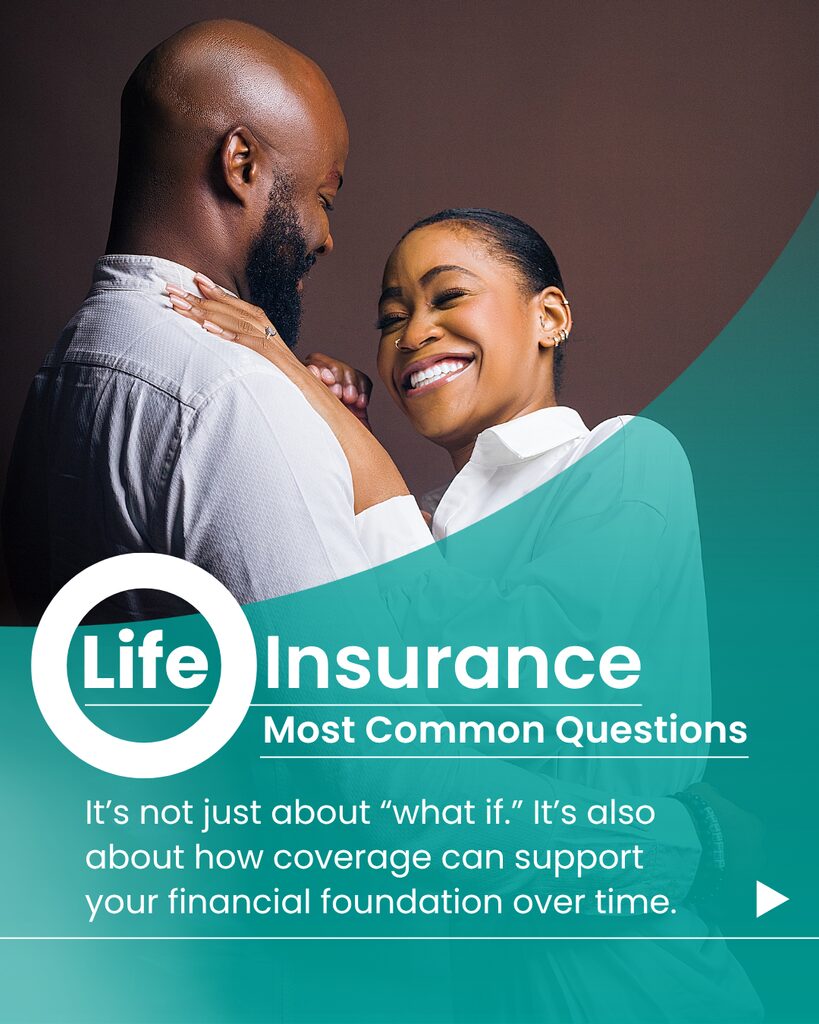
Life Insurance: Most Common Questions
Life insurance is often framed as something you only think about "just in case." But for many people, it can be part of a broader financial foundation—supporting both current flexibility and future considerations.
From how coverage works to what employer benefits actually provide, understanding the basics can make it easier to decide what fits your situation.
Several factors affect the cost and availability of life insurance. And any guarantees associated with a policy depend on the issuing insurance company's ability to continue making claim payments.
What is Life Insurance, Really?
At its core, life insurance is designed to provide financial support to the people who depend on you. That could include a spouse, children, or others who rely on you.
Isn't It Just for Worst-Case Scenarios?
That's a common perception, but many policies are designed with more flexibility than people realize.
Did You Know Some Policies May Build Value Over Time?
Certain types of life insurance may accumulate cash value.
What About Coverage Through Work?
Employer-provided life insurance can be a helpful starting point. But it's often limited and may not follow you if you change jobs.
Is Employer Coverage Enough?
Workplace policies are often tied to your role and may have limits. You may want to consider other factors with life insurance.
Are There Options Beyond Basic Coverage?
Some policies offer optional features, so it's important to understand how a policy works and ask a lot of questions.
It's About Building a Foundation
Life insurance is one piece of a broader financial picture. Understanding how it fits into your overall strategy can help you make more informed decisions over time.





Follow us on social media for more timely content delivered directly to your news feed!