
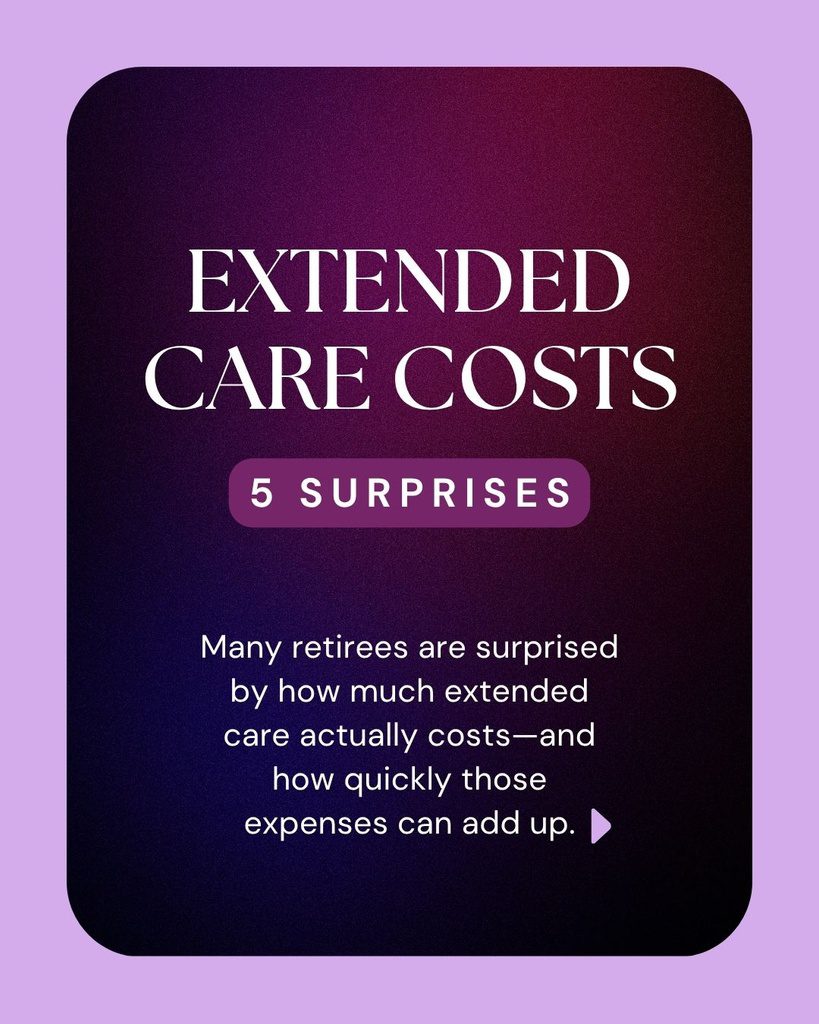
Extended Care Costs
Extended care is one of the biggest wild cards in retirement. Costs vary by location, care type, and health needs—but they've all been rising faster than many realize.
These five insights can help you understand what drives costs and why they often catch retirees by surprise.
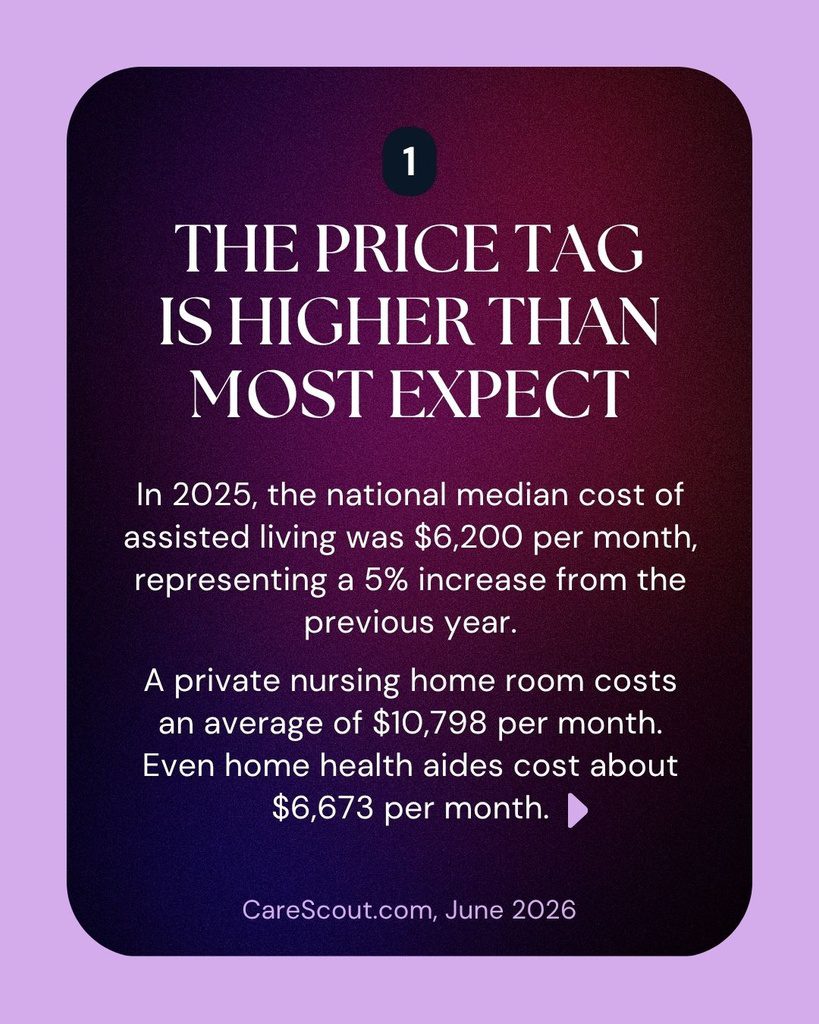
#1 - The Price Tag is Higher Than Most Expect
In 2025, the national median cost of assisted living was $6,200 per month, representing a 5% increase from the previous year.
A private nursing home room costs an average of $10,798 per month. Even home health aids cost about $6,673 per month. [1]
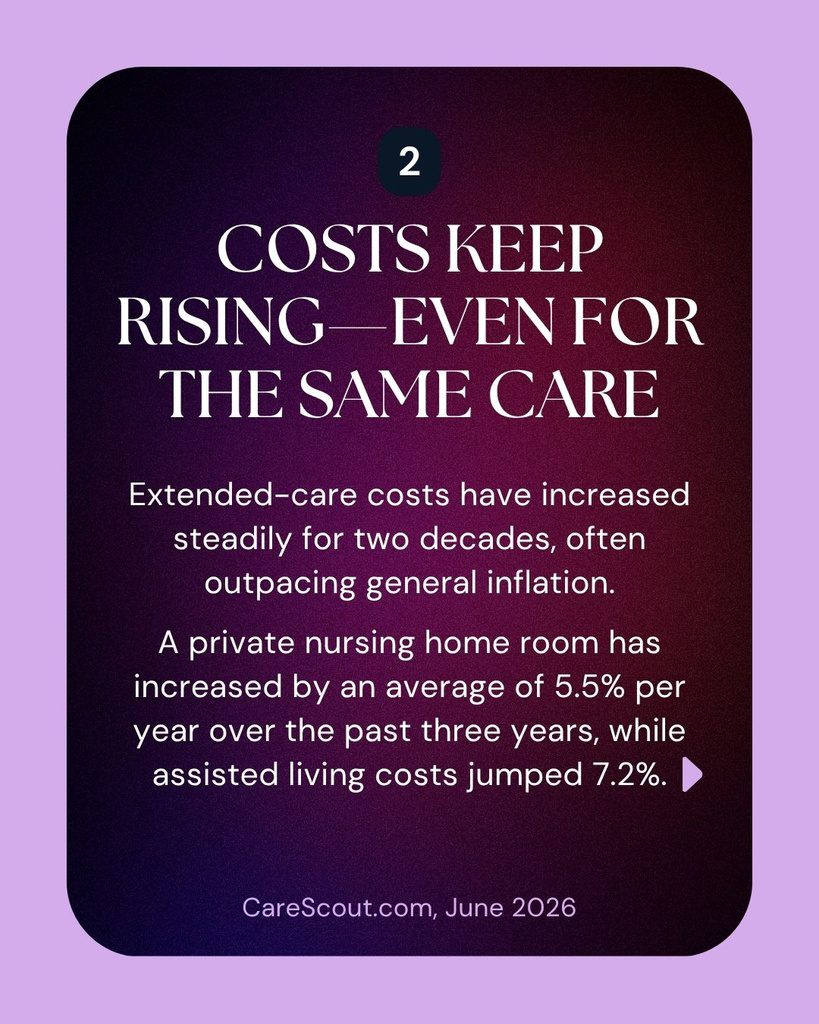
#2 - Costs Keep Rising, Even for the Same Price
Extended-care costs have increased steadily for two decades, often outpacing general inflation. A private nursing home room has increased by an average of 5.5% per year over the past three years, while assisted living costs jumped 7.2%. [1]
#3 - Coverage Isn't Always What People Think
Many assume Medicare plays a role, but it only pays for limited skilled services following hospitalization.
Extended care, like assistance with bathing, dressing, or daily activities, is generally not included. [2]
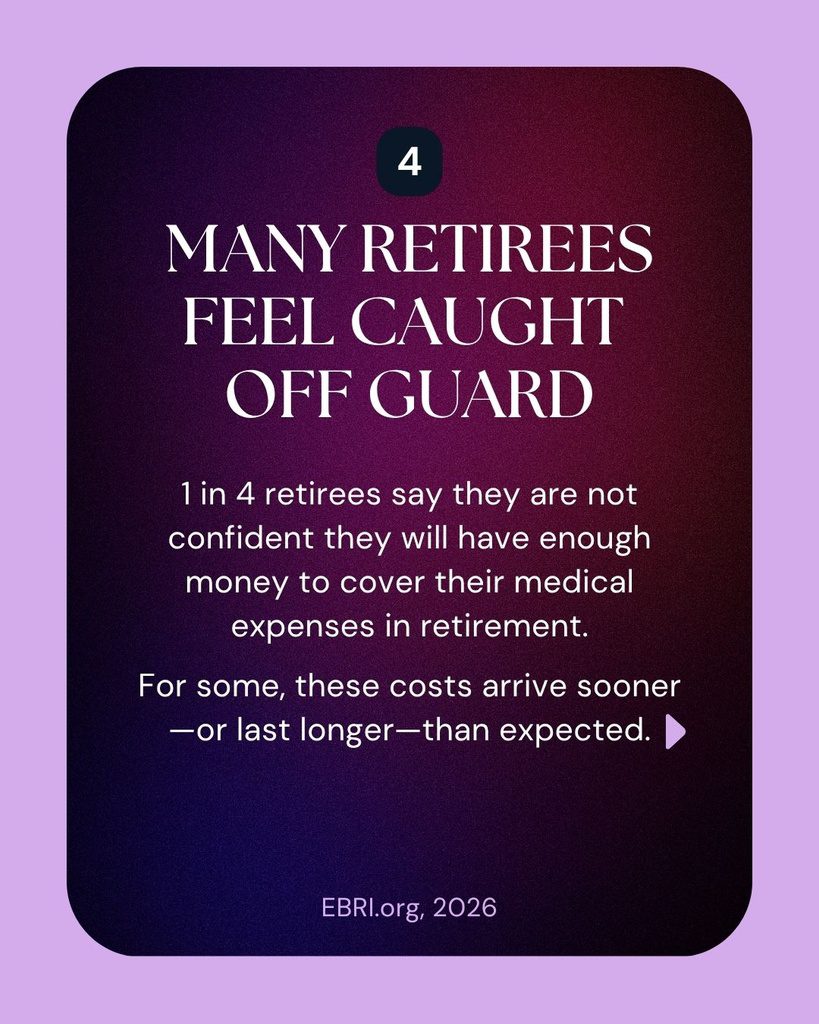
#4 - Many Retirees Feel Caught Off Guard
1 in 4 retirees say they are not confident they will have enough money to cover their medical expenses in retirement.
For some, these costs arrive sooner, or last longer, than expected. [3]
#5 - Planning Early Can Help Ease the Shock
Understanding how care costs vary (by location, type of care, and level of need) can be helpful as you prepare.
It's not about predicting the future; it's about knowing what's possible.
A Little Awareness Goes a Long Way
Extended care can happen when you least expect it. Knowing the numbers now can help you make informed decisions later.



Sources:
- CareScout.com, June 2026
- AALTCI.org, June 2026
- EBRI.org, 2026
Follow us on social media for more timely content delivered directly to your news feed!